AIWA
A speculative exhibition experience exploring how people might relate to a highly conversational AI assistant before that kind of interaction became mainstream.
Overview
AIWA was a speculative experience exploring the future of personal AI assistants. The project asked how a fully conversational AI might engage with people in a way that felt friendly, personal and trusted.
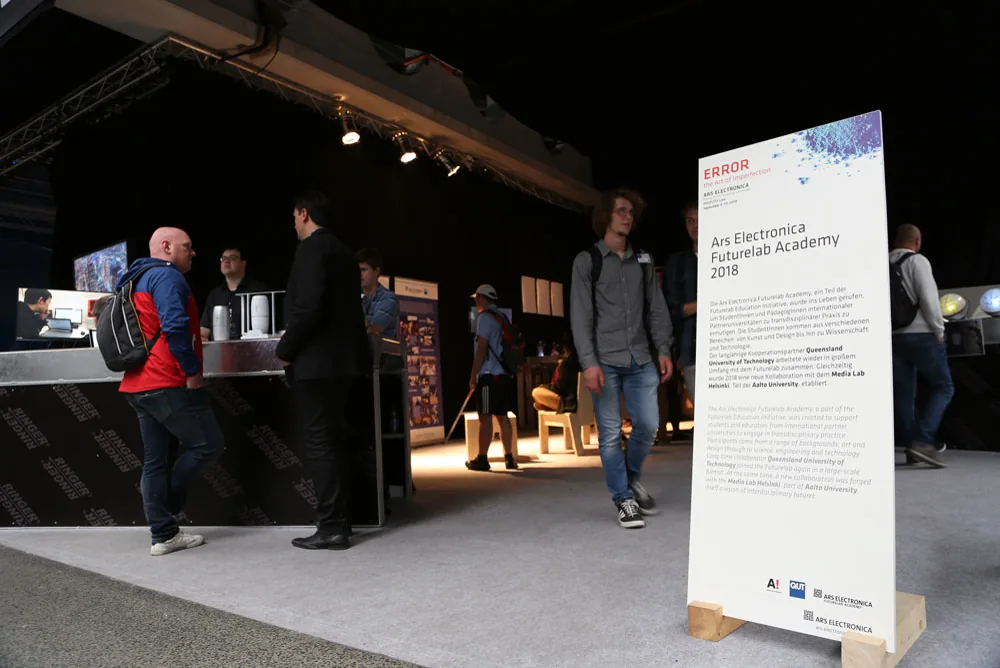
The work was developed as part of a multidisciplinary QUT project and shown through public presentation contexts including QUT, Brisbane Powerhouse and Ars Electronica Festival. Rather than explaining AI only through theory, the project created an experience where participants could encounter the idea through interaction.
Challenge
At the time, conversational AI was not yet part of everyday life in the way it is now. The challenge was to make the implications of that future feel more concrete: what would it mean to speak with an AI assistant, form trust, and feel that the system understood you?
The project needed to explore the human side of the interaction, not only the technology. The important question was not simply whether an AI could respond, but what kind of relationship people might imagine forming with it.
The experience
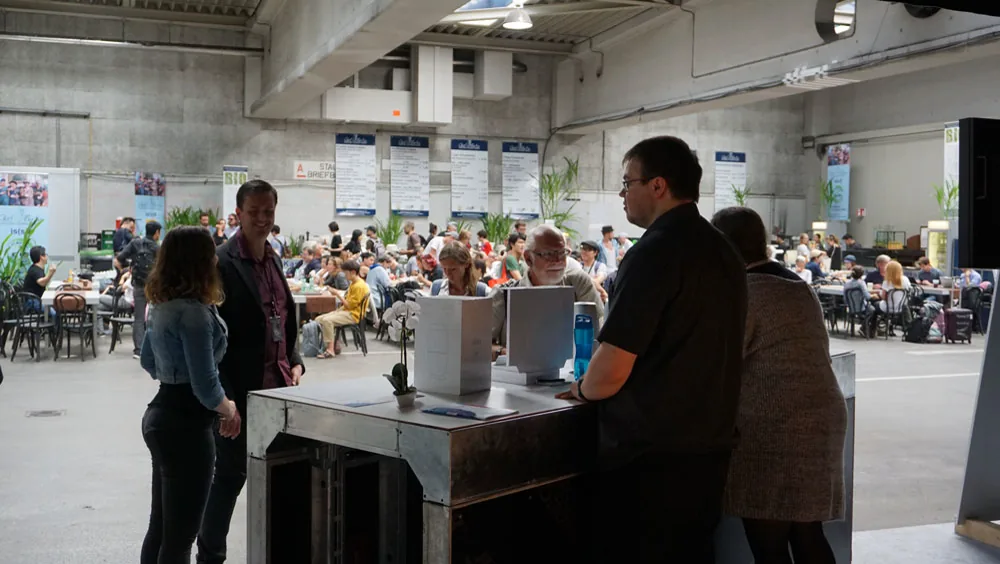
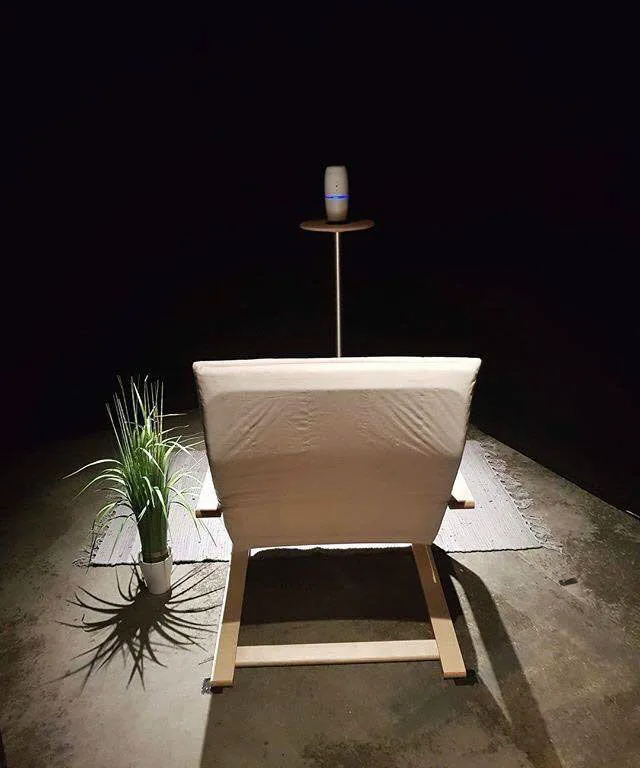
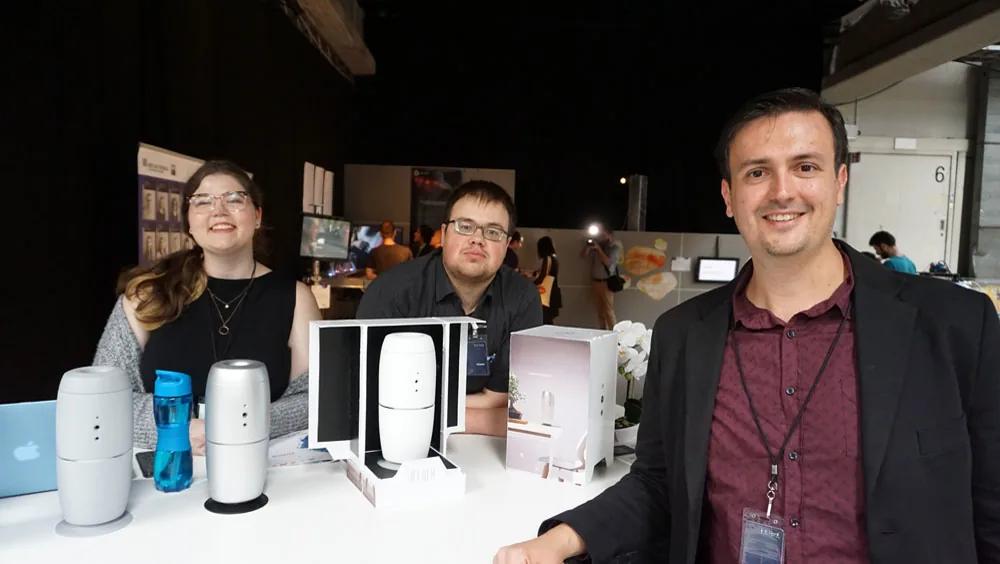
AIWA was presented as a future-facing AI assistant experience. Visitors encountered the concept through a designed interaction and surrounding exhibition context, including a booth-style presentation and a more private conversational moment.
The value of the experience was in making the idea of conversational AI feel immediate. Participants could respond to it as something they had encountered, not just something they had been told about.
Physical presentation
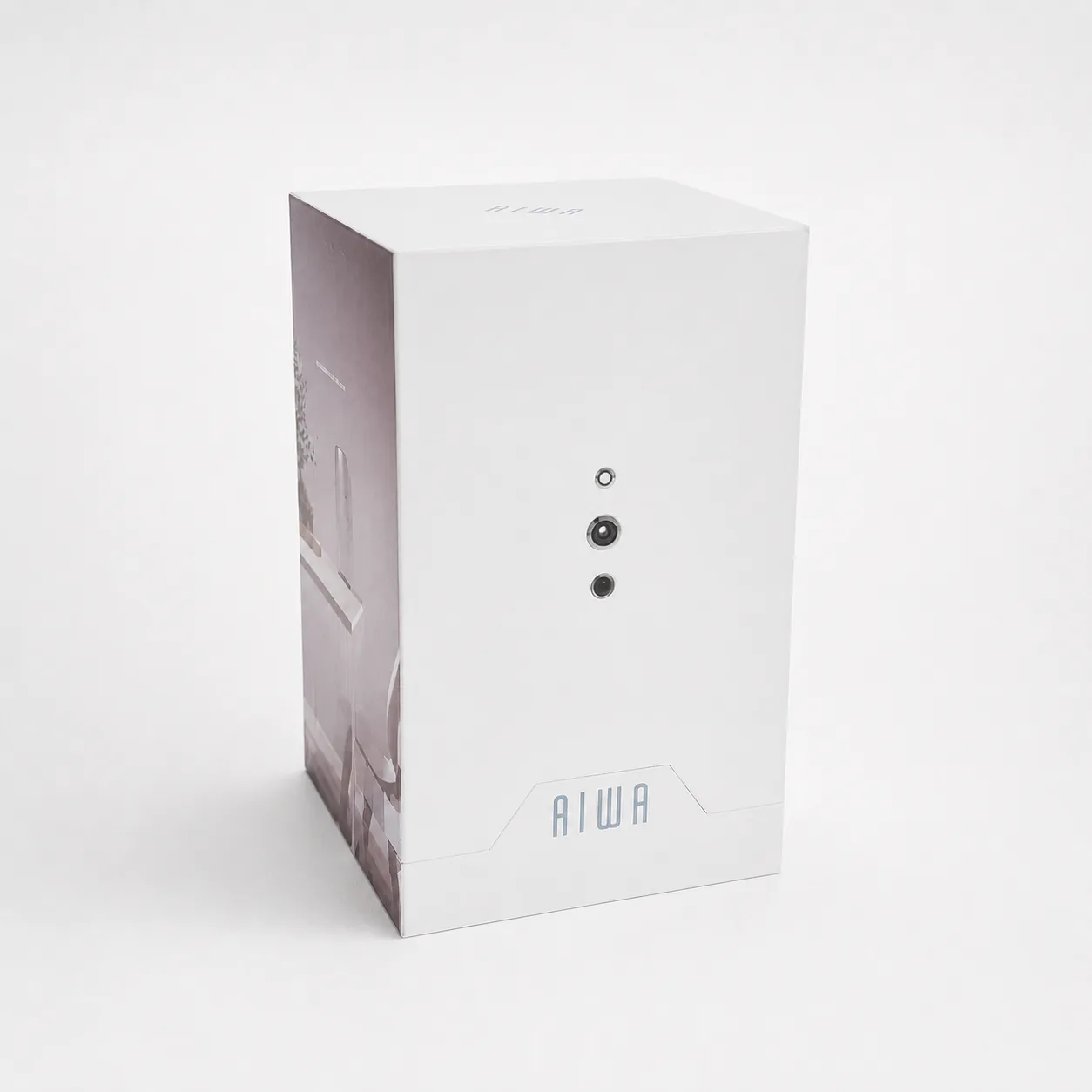
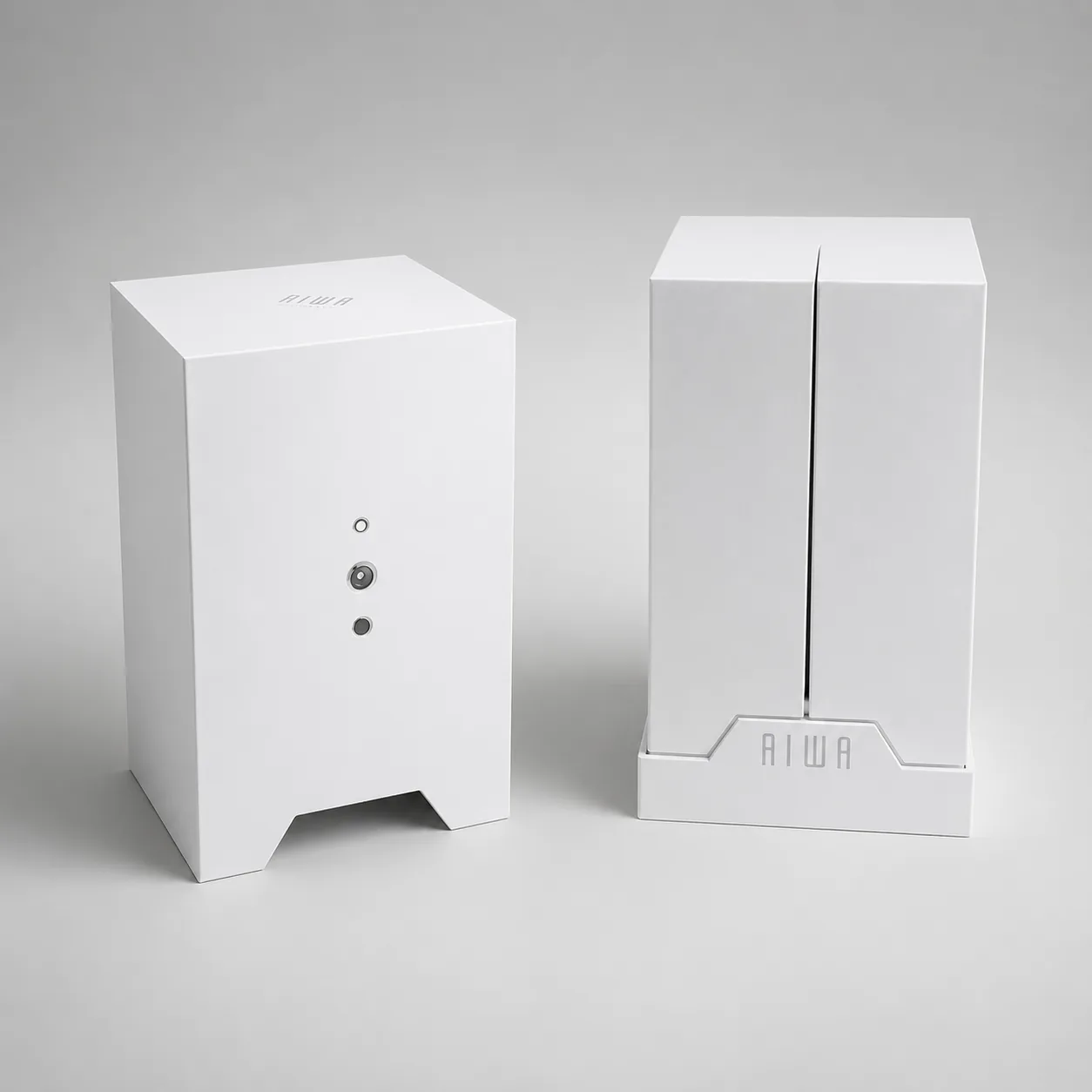
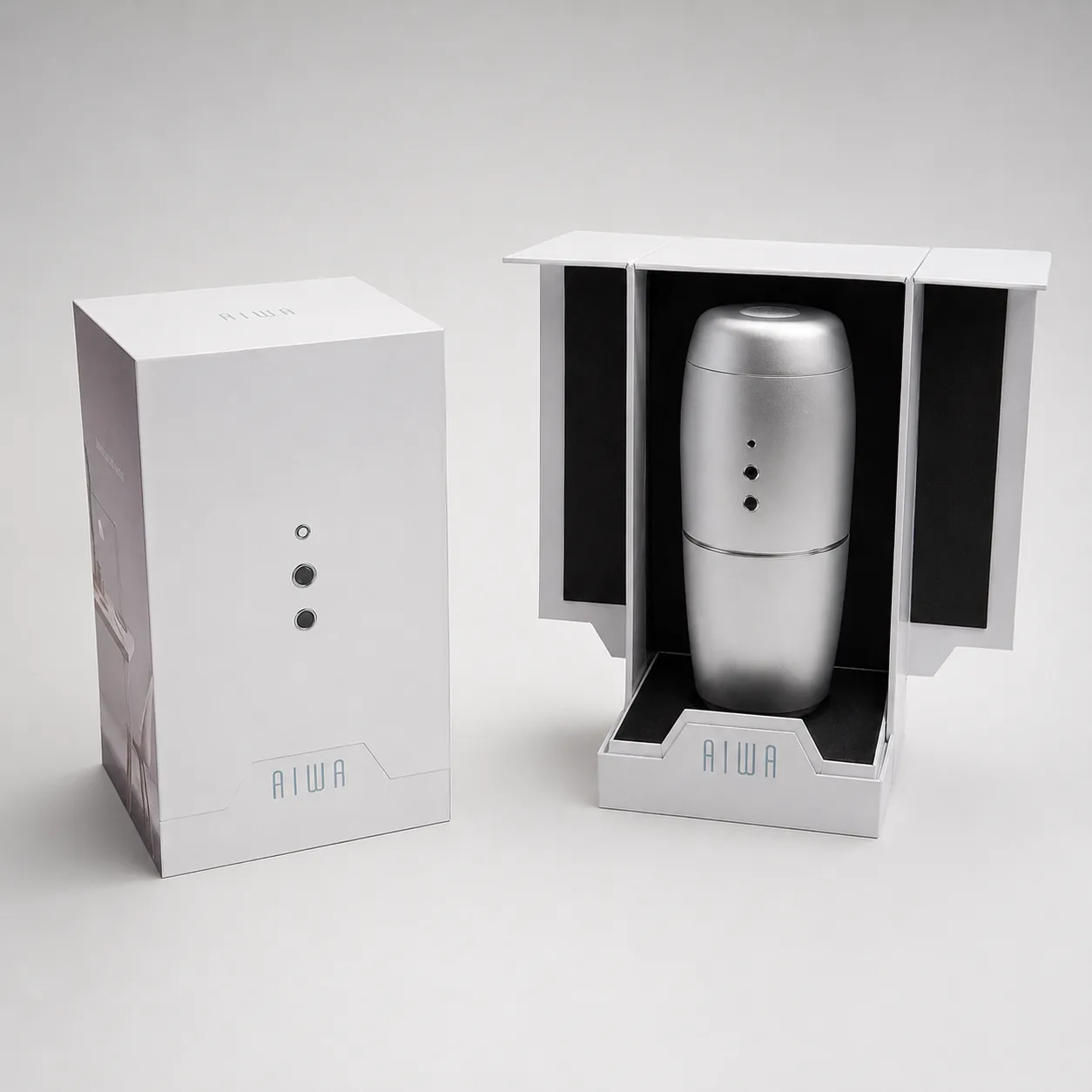
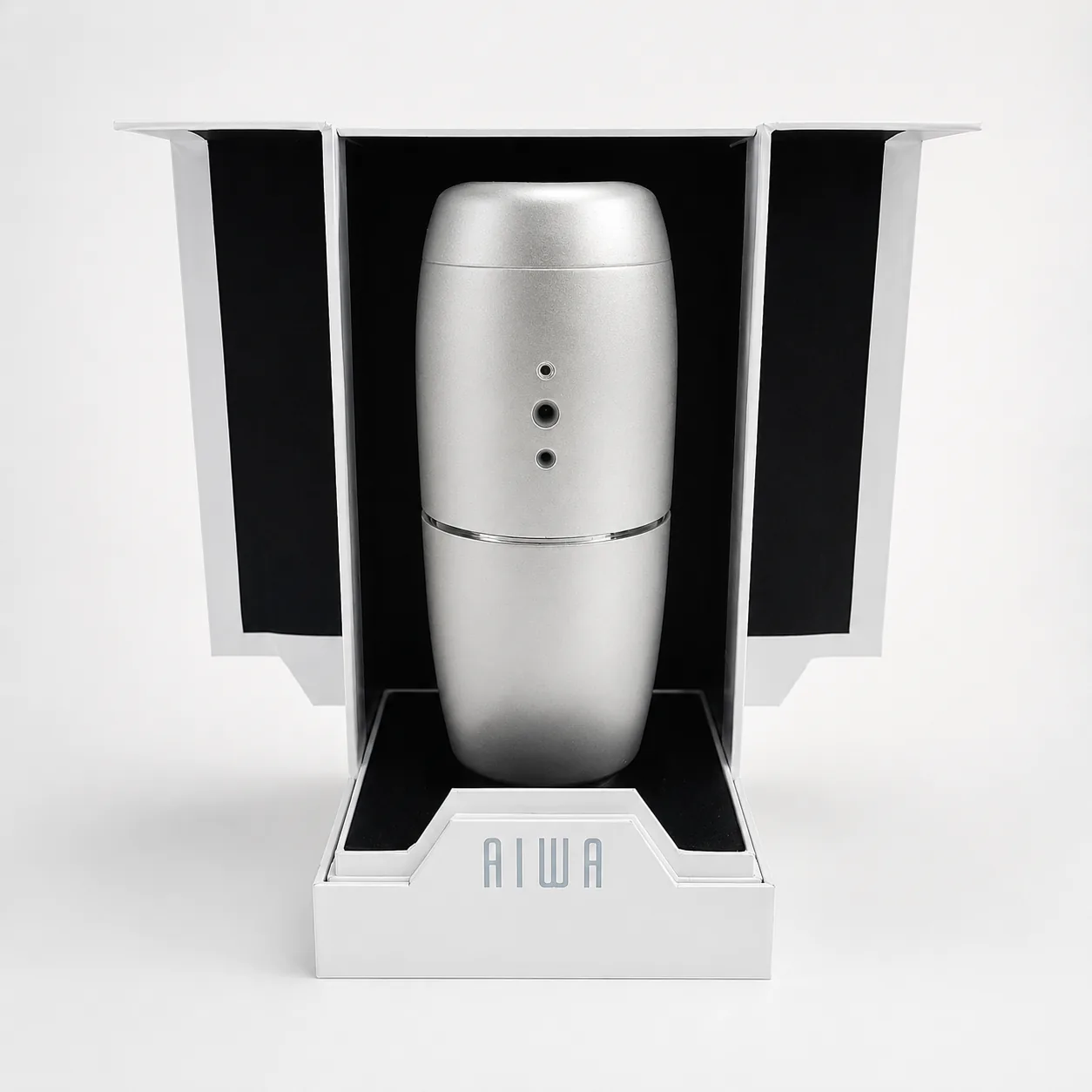
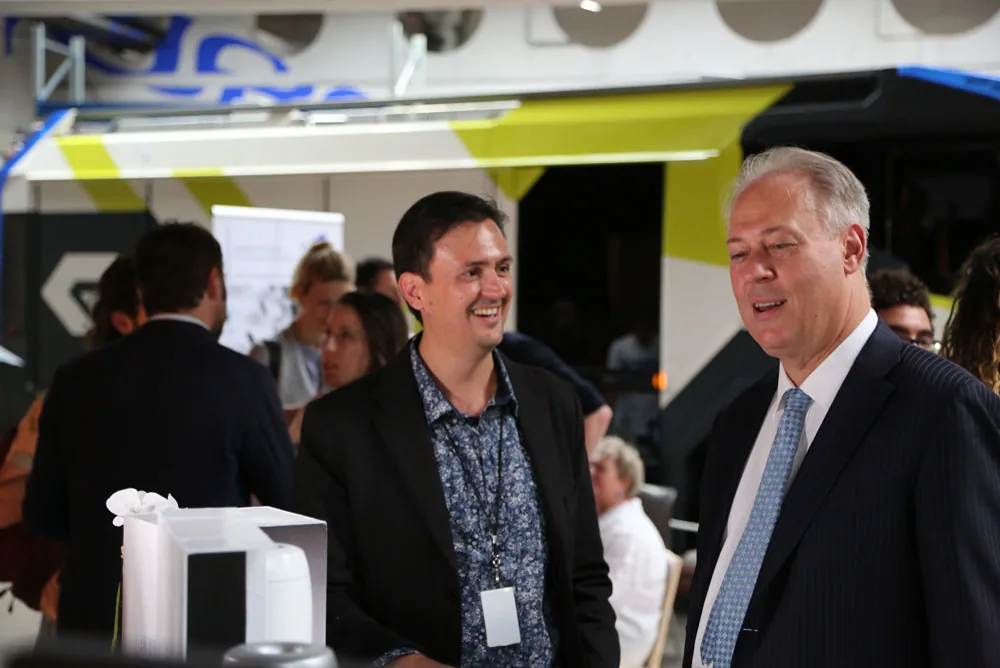
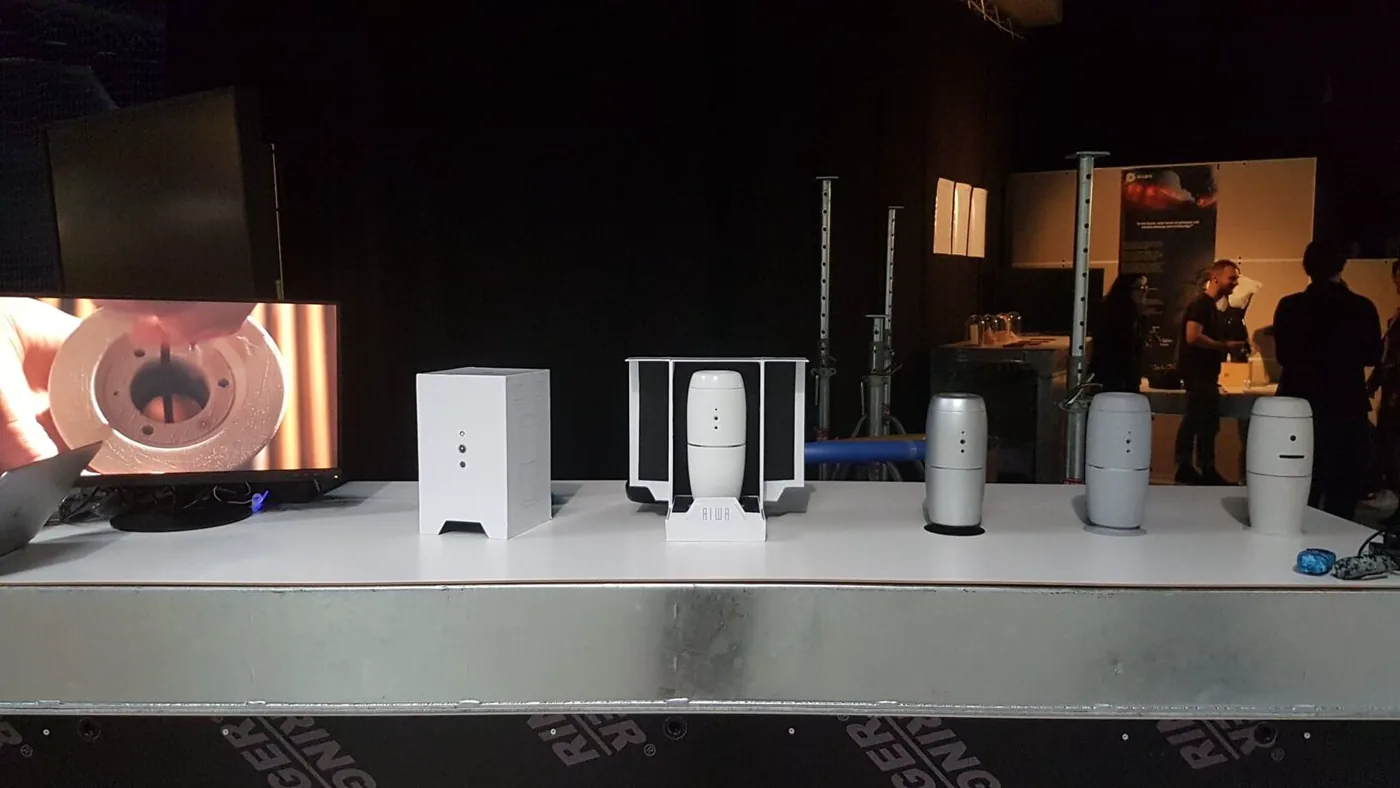
AIWA also included a physical presentation layer. I designed packaging and object presentation elements that helped frame the assistant as something people could encounter as a future product, not only as an abstract idea.
The packaging and display context were part of the speculative experience. They helped make the concept feel more concrete, giving visitors a way to understand AIWA as an object, a relationship and a possible service before entering the conversational experience.
Exhibition context
The AIWA artefacts were presented within exhibition and showcase settings, including Ars Electronica. The physical display helped situate the concept publicly, while the more focused interaction invited people to consider what a trusted relationship with a conversational AI might feel like.
What I contributed
- Experience design
- Human interaction framing
- Speculative service / product context
- Physical object and packaging presentation
- Exhibition display context
- Interaction design thinking
- Multidisciplinary concept development
- Visitor experience considerations
- Presentation and experience framing
What this shows
AIWA shows the value of experiential simulation. Some emerging technologies are difficult to understand through explanation alone. By placing people inside a designed interaction, and supporting that interaction with physical artefacts and exhibition framing, the project created space for more concrete conversations about trust, agency, intimacy and the future of AI.
This connects directly to my wider practice: using interaction, physical context and guided experience to help people understand complex ideas more clearly.
Relevance now
AIWA feels especially relevant now because many of the questions it explored have become everyday questions. People now interact with conversational AI systems directly, and the issues around trust, agency and relationship are no longer speculative.
AIWA remains relevant because it treated AI as an experience to be framed, not just a technology to demonstrate. The project explored how physical presentation, conversational interaction and exhibition context could help people think more concretely about trust, agency and future AI relationships.
For my current work, AIWA remains a useful reference point because it showed how designed experience can help people understand an emerging topic before it is fully familiar.
Project Images