Old Government House AR Tours
A deployed AR tour experience for Old Government House, developed from earlier honours research into a fuller digital layer for exploring history, space and interpretation.
Overview
Old Government House AR Tours was a delivered place-based AR experience for Old Government House in Brisbane. The project built on my earlier honours research into site-specific AR storytelling and extended it into a fuller tour experience that could support visitors inside the building.
The work developed over several years. The initial research and prototype began during my honours year. After a pause while I created other AR exhibition experiences, the project was later funded and developed into a more complete AR tour environment. The final direction moved beyond the original theatrical prototype and focused on helping visitors understand the house through recreated historical context, visual wayfinding, curator-style guidance and rich media.
Challenge
Old Government House is a historically important place, but much of its meaning is not immediately visible to a casual visitor. Some rooms are used for multiple purposes, and the physical space does not always show how the building was used or why it mattered.
The challenge was to create a digital layer that could help visitors understand the building while they were actually inside it. The experience needed to support exploration, add context to rooms and objects, and make historical interpretation feel more present without replacing the physical site.
The experience
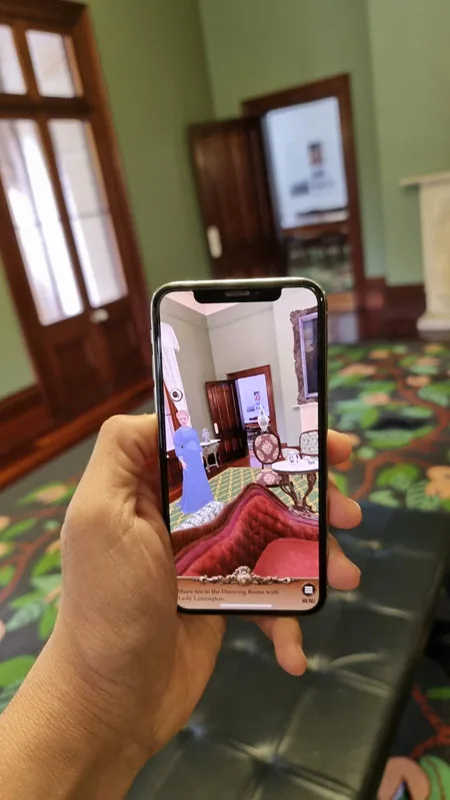
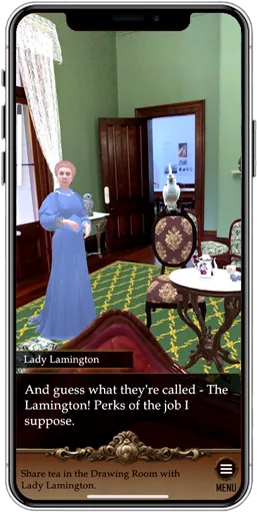
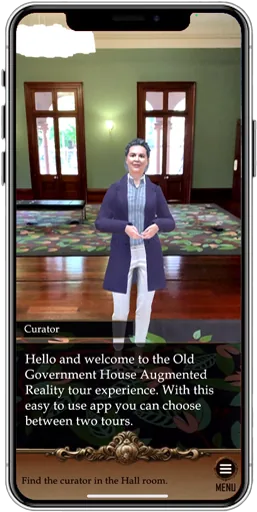
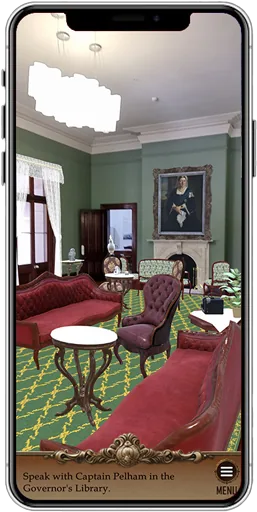
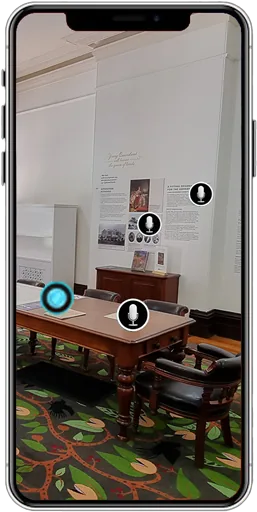
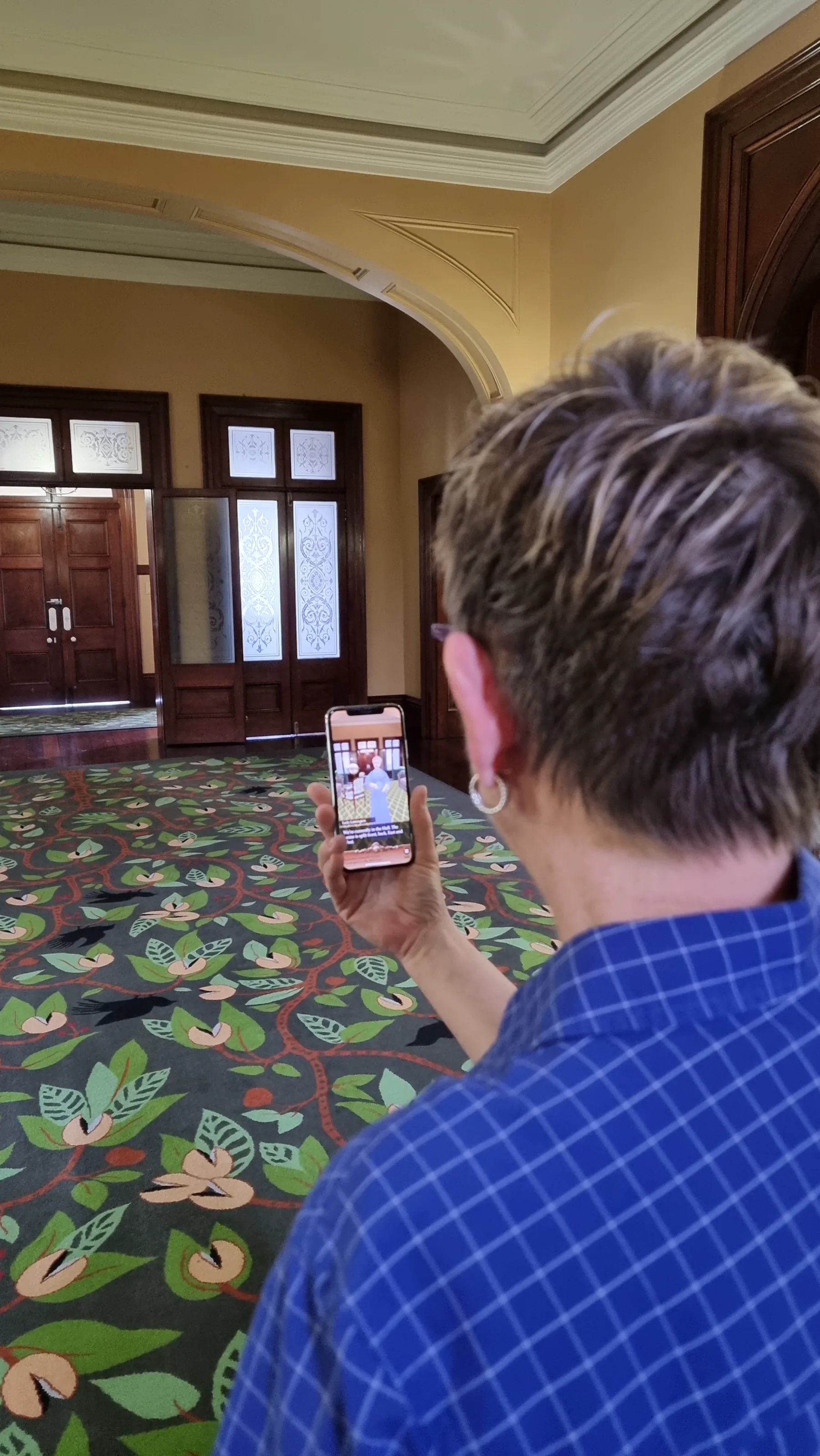
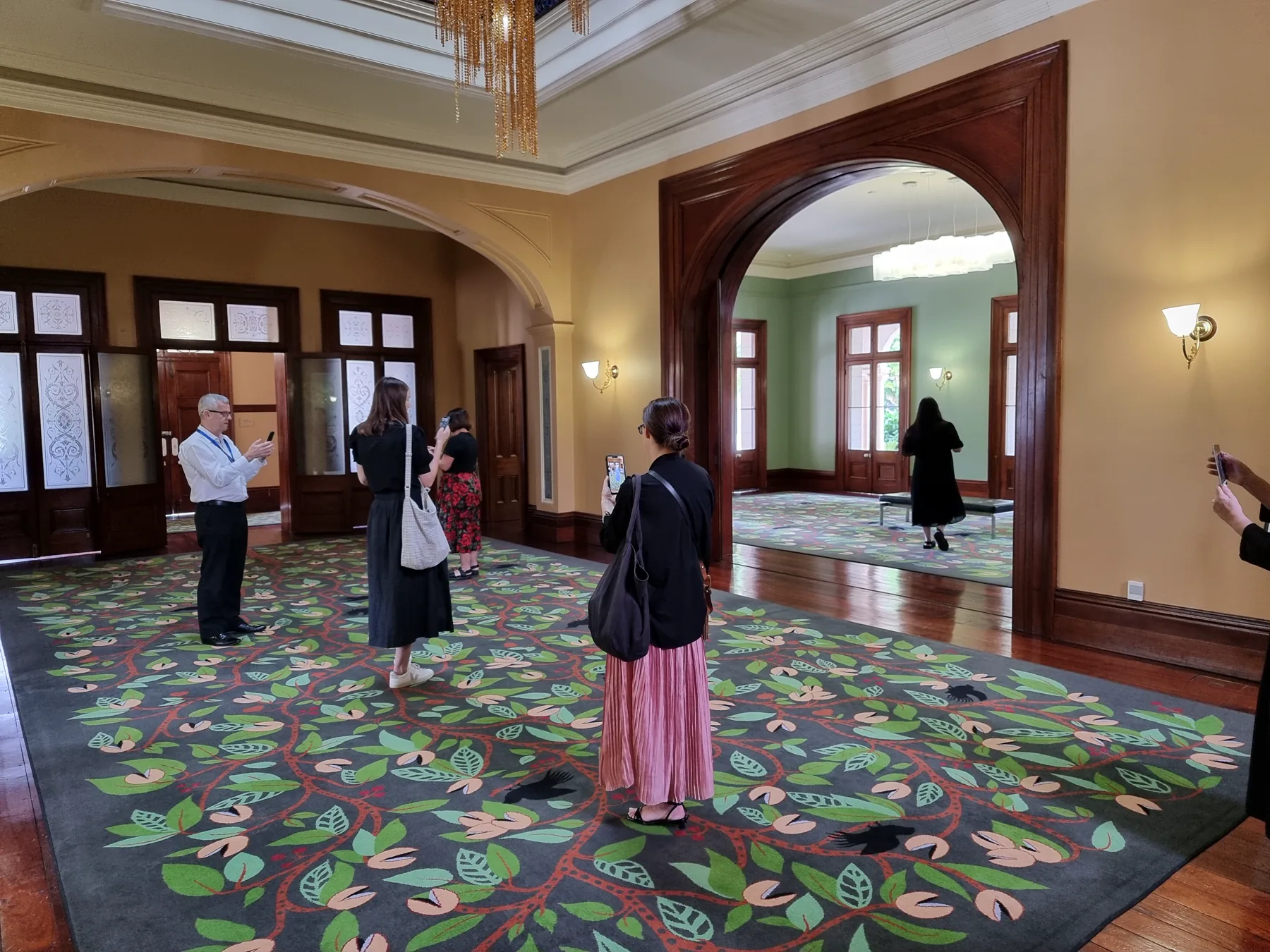
The AR tour allowed visitors to use a mobile device to see additional layers of interpretation within the house. Empty or lightly furnished rooms could be recontextualised with recreated historical furniture, characters, curatorial guidance, wayfinding and rich media.
The experience treated the building itself as the interface. Visitors moved through the physical space while the digital layer helped them understand what they were looking at, where to go next, and how the room connected to the broader history of the house.
What I designed and implemented
- Site-specific AR tour experience
- Visitor flow and tour structure
- Digital interpretation strategy
- 3D historical environment direction
- Mobile interface and interaction design
- Physical entry poster / QR touchpoint
- Visitor onboarding from physical space into AR experience
- Clear scan-to-start signage and entry instructions
- Wayfinding and room-based guidance
- Curator-style tour content pattern
- Rich media placement in physical space
- Technical prototyping and implementation
- Practical delivery approach for use inside a heritage building
Physical entry point
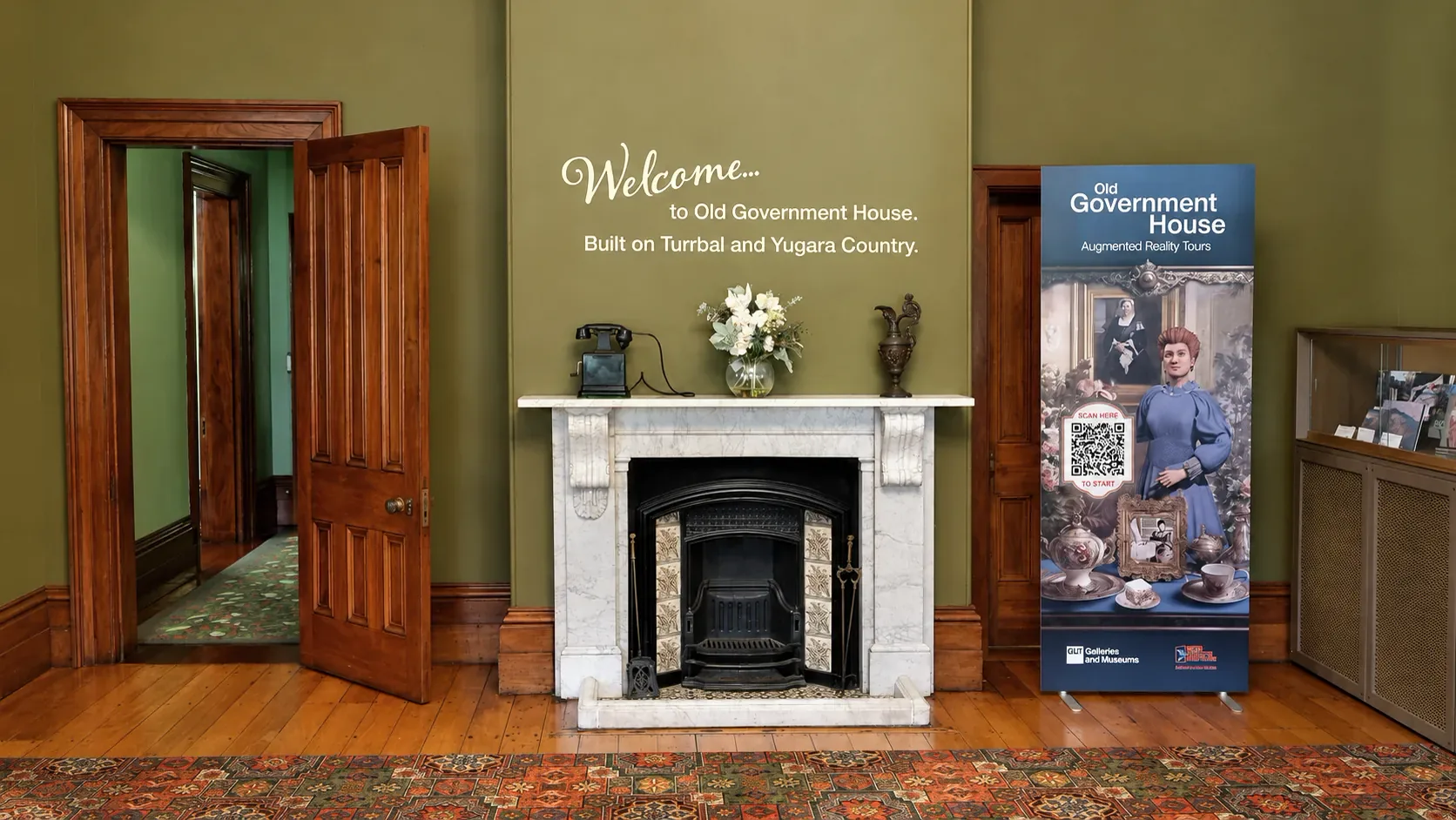
The experience also needed a clear physical entry point. I designed the poster signage that invited visitors to scan and begin the AR tour from inside Old Government House.
This became an important lesson in later work: the digital layer often begins before the screen. The sign, poster or physical prompt needs to be simple, visible and easy to understand so people know what the digital experience is, why it matters and how to start.
This built on lessons from earlier AR exhibition work, where the physical prompt was critical in helping visitors understand when and how to enter the digital layer.
Research foundation
This delivered AR tour project built on my earlier honours research, Skullduggery at Old Government House, which explored how a site-specific AR adventure-game structure could help casual visitors understand the intangible cultural heritage of Old Government House. That research was later published in ACM Journal on Computing and Cultural Heritage.
What this shows
This project shows the deeper origin of my current digital layers work. It was about more than adding technology to a historic site. The aim was to use a mobile digital layer to make the physical place easier to understand, explore and interpret.
This project pushed my thinking beyond AR as a single interaction. To make the experience work in a real heritage environment, I had to consider the full visitor journey: how people entered the experience, moved through the building, understood each room, followed guidance and recovered when the technology or context created friction. That became a key lesson for my later work: the technology is only one part of the experience. The surrounding structure, service flow, physical setting and fallbacks matter just as much.
It also shows the practical challenge of moving from a research prototype into a delivered experience: working with a real site, real visitor needs, technical constraints and the limits of what can be supported inside a public heritage environment.
Relevance now
Old Government House AR Tours shaped the way I think about digital experience in physical places. Many of the questions from this project still sit underneath my current work: what should the visitor see first, how much guidance is useful, where does digital add context, and how can technology support the experience without becoming the point of the experience?
The current guided digital experience work is more mobile-web focused and often lighter than AR, but the core idea is the same: use digital structure, context and interaction to help people understand a place or story more clearly.
Project video
Project Images